Autism360
A UX audit and app redesign
4 min read
- Role
- First UX Designer on a small in-house product team
- Team
- CEO, CTO and COO, senior React engineers and test engineers
- Users
- Parents and carers of autistic children, on iOS and Android
- Year
- 2023
Overview
As Autism360's first UX Designer, I aligned its leadership on what the app experience should be, audited the app on iOS and Android, and proposed a redesign ahead of an international launch.
Autism360 gives parents and carers a digital therapeutic platform for supporting the autistic children in their care: self-paced courses from expert therapists, real-time online consultations, resources and community support.
Impact
- 3 leaders (CEO, CTO and COO) aligned on priorities in one workshop
- 6 new markets the redesign was prepared for: the USA, UK, Ireland, Canada, Singapore and Malaysia
- A redesign direction, wireframes and high-fidelity concepts, backed by the CEO
Challenge
My brief was to audit the user experience of the Autism360 app on Android and iOS, and work through a backlog of design tasks with stakeholders, senior React engineers and test engineers. With a soft marketing launch into six new markets close, the app needed to be clearer and more appealing, and to carry the brand better.
The UX workshop
I ran a face-to-face workshop with the three key decision-makers: the CEO, CTO and COO. In the morning we discussed what the Autism360 experience should be: how users should feel, and what they should learn and understand. Then I helped them pinpoint and prioritise the areas needing the most work.
Over lunch I organised the morning's findings, and in the afternoon ran a card sort that grouped them under three themes:
User needs
Understanding their child's developmental journey and progress in the app, and access to reviews from other Autism360 users
Company goals
Clear communication of Autism360's mission, research-backed approach and reputation
Design considerations
Personalisation for each child's needs, strong security, a user-friendly interface, and clear trial and pricing
I then wrote user statements from the discussions, and stakeholders placed each one under the issue it addressed.
Building user empathy
Using those user needs, I helped the team prioritise how new users could get started in the mobile app faster. The flow begins with the Welcome to Autism360 email sent automatically after someone subscribes, in the app or on the website.
To deepen our understanding of Autism360's users, I then ran a follow-up empathy mapping workshop on Zoom, exploring what users say, think, do and feel.
Auditing the current app
With no budget for formal usability testing, I went through the app myself as a new user would, from sign-up through every feature. I tested on two builds: the released app on my iPhone, exactly as users download it, and the pre-release build on TestFlight, so I could catch differences between what was in development and what users actually got.
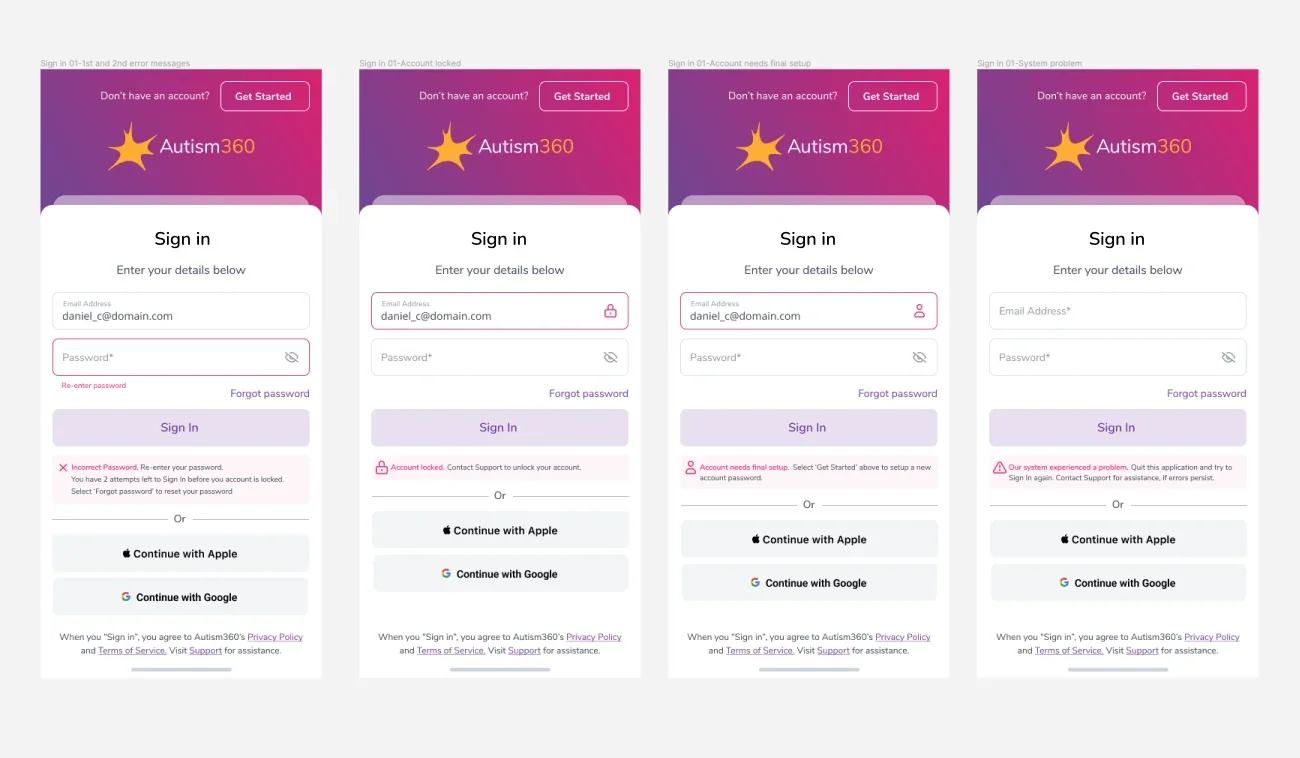
The screens most in need of work were login, purchase and success, and the landing screens for Home and Courses, Program, Sessions, Workshops and Resources.
Ideation & Prototyping
In a later presentation I showed a mood board connecting the Autism360 brand to the app's look, and proposed an illustrative UI style aimed at wider appeal: modern, but built to stay current for years as the product expanded into new markets.
With the CEO backing the direction, I moved into wireframes to improve the app's functionality and clarity, and proposed running two tracks in parallel: refining the existing backlog while building a fully redesigned experience with a balanced visual hierarchy and a stronger brand.
Onboarding
Illustration style
Project Reflection
Outcome
My time at Autism360 ended unexpectedly, and the designs weren't implemented in the next iOS or Android release. They remain in Autism360's design repository, and I'm proud to have contributed them to a service that supports the disability sector and the carers within it.
What I learned
Bringing the three leaders into one room early turned competing priorities into a shared set of user needs, company goals and design considerations. Any future redesign can build on that foundation.
Have a project in mind?
Let's discuss how my design system, accessibility and product strategy skills can help your team.